|
|
ASSAY LAB, RANGRITA GOLD TESTING AND REFINERYPVT. LTD. | Doc No. |
F/7.3/01 |
||
Issue No.: |
01 |
Issue Date: |
28-09-23 |
||
Amend No. |
00 |
Amend Date: |
-- |
||
| SAMPLING PLAN & METHOD | Prepared & Issued by |
Quality Manager |
|||
Reviewed & Approved by |
Director |
||||
Controlled Copy-04 |
|||||
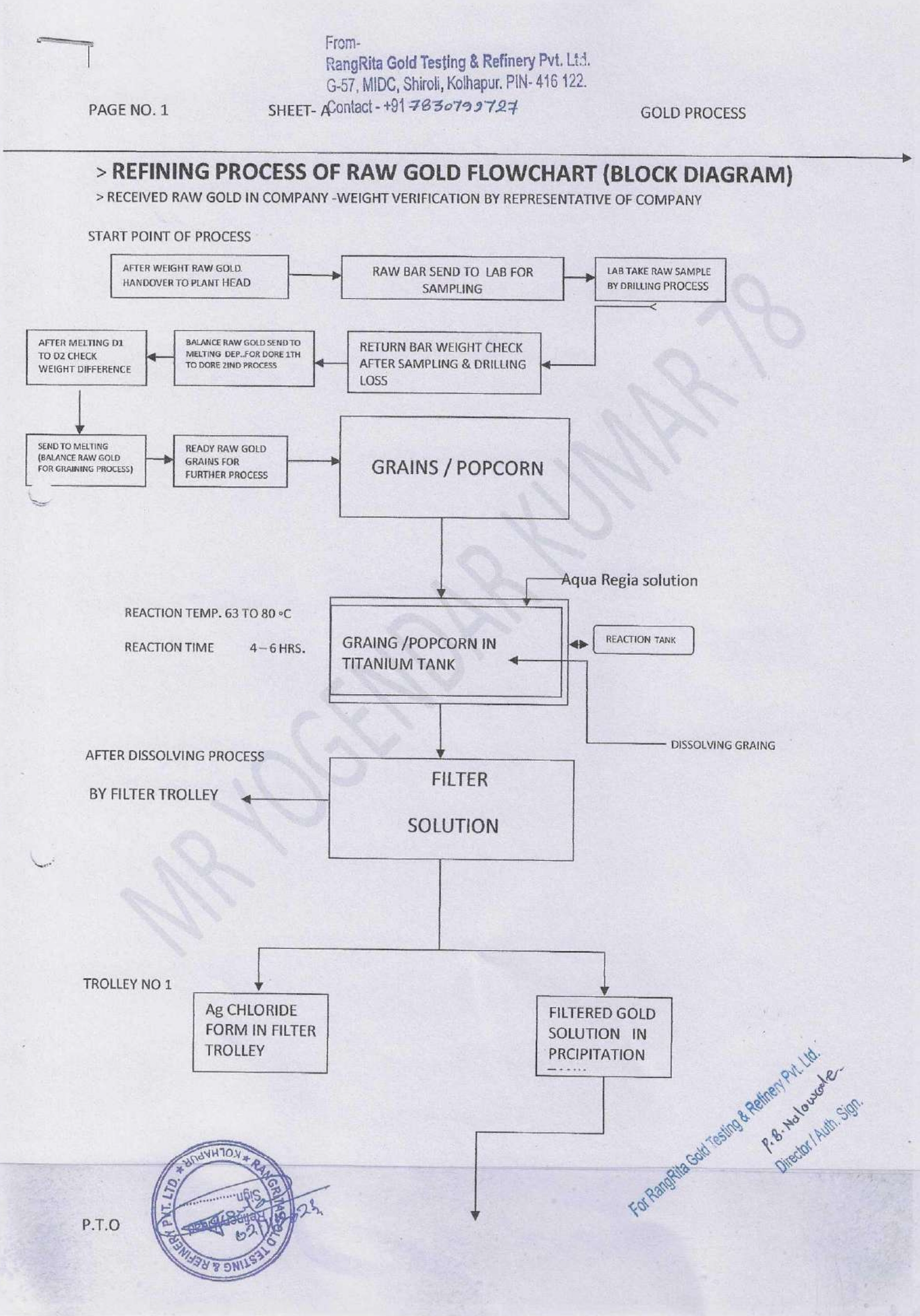
When the bullion is in the form of an ingot or slab and is of high fineness, sampling by ‘cutting’ or ‘drilling’ method is adopted as follows;
1) Cutting Method Used in Gold Alloy & Fine Gold.
Samples are cut from diagonally opposite corners of the upper and lower sides of the bar. Cutting is to be done with a sharp narrow steel chisel. From each cut, 1 to 1.5 g sample may be taken. The cut pieces should be flattened, rolled, cut into small pieces and thoroughly mixed together.
2) Drilling Method Used in Gold Dore.
The ingot is drilled on the top corner and on the opposite bottom corner with a 3 to 10 mm highspeed tool steel drill. When it is known that the ingot is not of uniform composition or is of low — fineness, the minimum 2 drillings should be taken from the top and 2 from the bottom at diagonally opposite corners. The surface drilling resulting from the first few revolutions of the drill, should be rejected till the hole on the ingot is equal to the diameter of the drill. The drilling should be carried out to a little more than half — way through the ingot. The minimum weight of drilling from the above 4 borings should not be less than 5 g. In case of fine gold, the drilling should be cut into small pieces and mixed thoroughly before taking up for assay. In case of low — fineness samples, lots of drillings may be assayed separately or 2 lots from the top may be mixed to form one sample and 2 lots from the bottom mixed for a second sample. When the material is in the form of sheet or wire, small pieces shall be cut preferably from opposite ends and thoroughly mixed together.
Notes:
(1) In case the sample is found to be non — homogeneous by assaying, the ‘Dip Sampling’ method should be adopted for sampling.
(2) When the composition of the samples is unknown, use a preliminary assay for the estimation of the fineness of gold.
(3) If the cornet breaks up during the parting process, this is often an indication of excess silver.
3) Dip Sampling Method in Non- Homogeneous Gold Dore & Fine Gold.
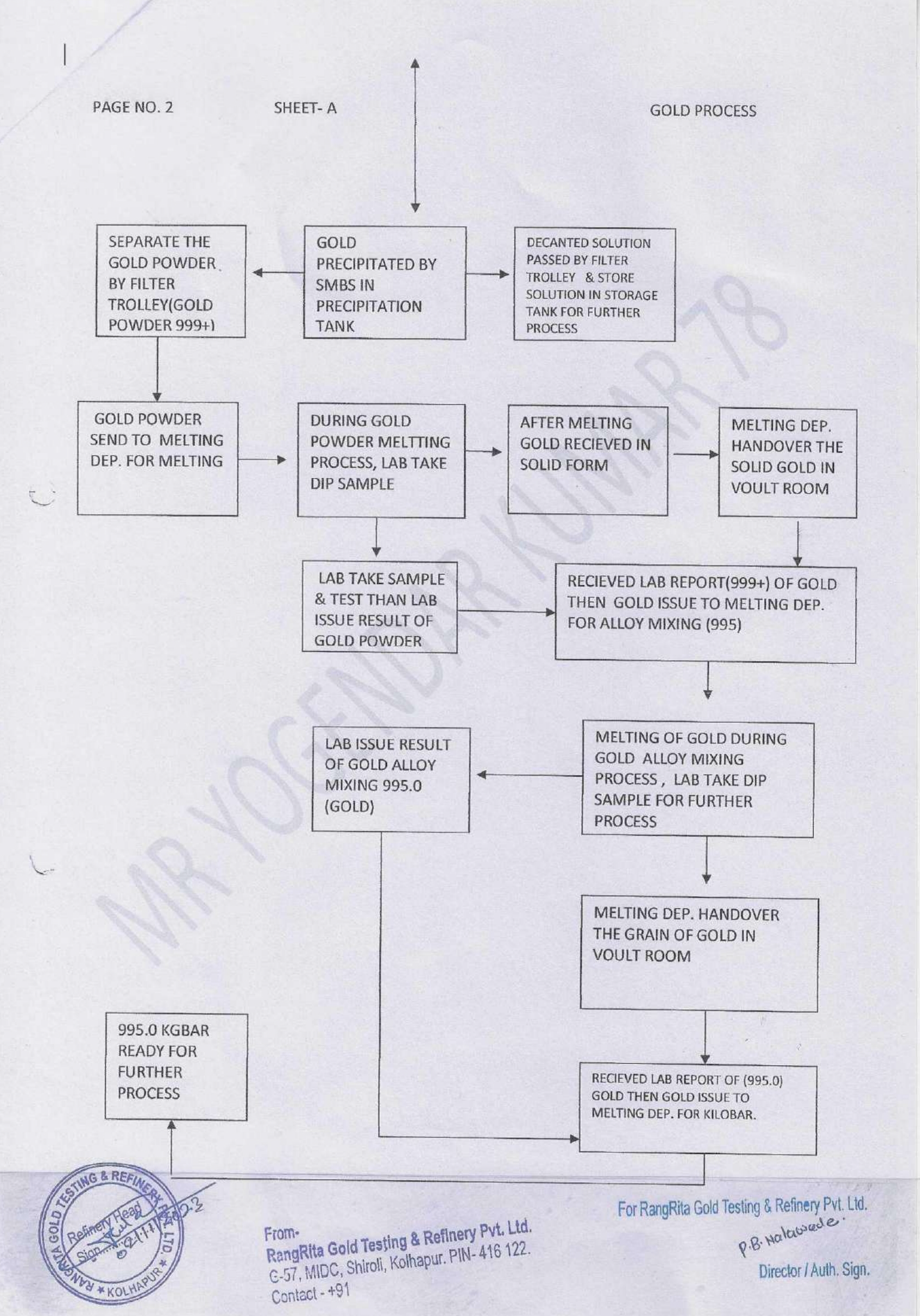
When the bullion has been melted it should be stirred well with a preheated graphite stirrer and a dip sample of about 5 g taken with a preheated graphite sampler from the molten metal from the middle of the pot just before casting. The sample may be granulated or cast into a small button or allowed to solidify in the sampler. This may be rolled and cut into small pieces for assaying. The granules may be hammered, if necessary, for complete removal of trapped water. Alternatively, quartz tube may also be used for drawing dip sample.
Notes
(1) In case of dispute with regard to sampling of ingot, slab, bar, sheet or wire, a ‘dip’ sample shall be taken from the representative lot.
(2) Granulation of the sample is not satisfactory for bullion of low-fineness as during pouring of the molten metal into water some of the base metals present may oxidize, thus altering the composition of the sample.
(3) Before taking samples by any of the above methods, all surface dirt from the article shall be removed and all instruments for cutting, scrapping, hammering etc, shall be cleaned thoroughly. No oil shall be used for drilling.
(4) When the bar has been pickled by dipping in acid after casting, the surface shall be well scrapped before sampling. The first portion of metal removed during the preparation of the sample shall be rejected.